Walking through Barcelona’s Gothic Quarter means exploring almost 2,000 years of history in just a few streets. Roman remains, medieval buildings, Gothic churches, historic squares, and traces of the city’s transformations coexist in one of Barcelona’s most fascinating areas.
Beyond its atmospheric alleys and impressive architecture, the Gothic Quarter offers the opportunity to understand how Barcelona developed from the Roman settlement of Barcino into the modern city we know today. The best way to discover it is simple: walk, observe, and pay attention to the details.
From Roman Barcino to Barcelona
The story begins more than 2,000 years ago with Barcino, the Roman settlement founded around the end of the 1st century BC. Although modern Barcelona has grown far beyond its original boundaries, traces of this ancient city are still visible throughout the Gothic Quarter.
Parts of the Roman walls can still be seen near Plaça Nova, while remains of the Temple of Augustus survive in the heart of the old city. These archaeological traces make it possible to imagine what Barcelona looked like centuries before its medieval expansion.
Walking through these streets therefore means moving across the foundations of the city itself.
The medieval city hidden in its streets
Barcelona experienced important growth during the Middle Ages, and much of this history can still be discovered while walking through the old center.
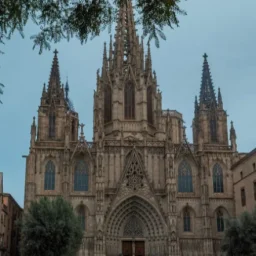
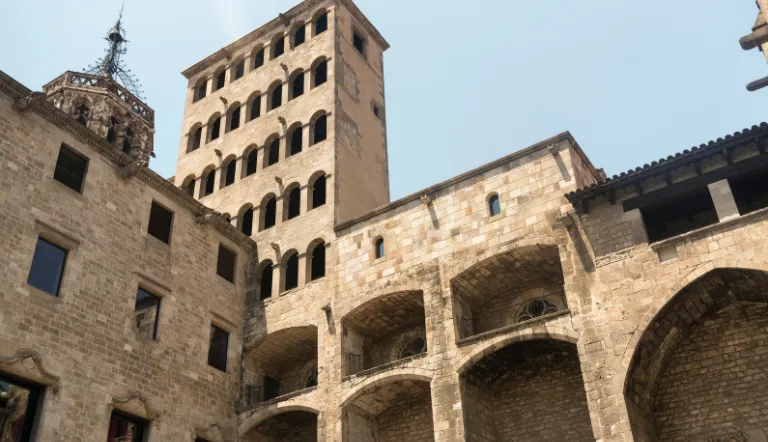
The Barcelona Cathedral, Plaça del Rei, and numerous narrow streets provide clues to the political, religious, and commercial importance of medieval Barcelona. Merchants, craftspeople, religious communities, and members of the nobility all contributed to the development of this part of the city.
Its maze-like street pattern also helps create the atmosphere that makes exploring the Gothic Quarter such a distinctive experience.
Squares that witnessed Barcelona’s history
Some of the most important moments in Barcelona’s history are connected to the squares of the Gothic Quarter. Plaça Sant Jaume, for example, remains one of the city’s political centers, with the Palau de la Generalitat and Barcelona City Hall facing each other.
Other places reveal very different chapters of the past. Plaça Sant Felip Neri, with the marks still visible on its walls from the Spanish Civil War, provides a powerful reminder that the neighborhood’s history extends far beyond the medieval period.
Understanding these stories turns an attractive square into a place filled with meaning.
Look closely and discover another city
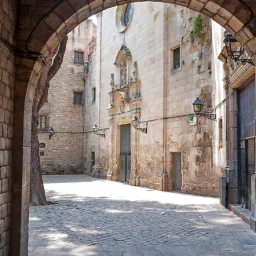
One of the pleasures of exploring the Gothic Quarter is discovering details that are easy to miss. Ancient stones, architectural fragments, inscriptions, courtyards, arches, and narrow passages reveal different periods of Barcelona’s development.
Not everything in the neighborhood is as old as it appears, either. Some elements associated with its Gothic image were created or transformed during the 19th and 20th centuries. Knowing how to distinguish between different periods adds another fascinating layer to the experience.
This is why walking with context makes such a difference: the same streets begin to tell completely different stories.
Walk through 2,000 years of Barcelona
A walk through Barcelona’s Gothic Quarter is much more than a visit to one of the city’s most beautiful neighborhoods. It is a journey through Roman origins, medieval expansion, political change, conflict, and the evolution of Barcelona into the city it is today.
With Be Local Tours, discover the Gothic Quarter through the stories hidden behind its streets and experience 2,000 years of Barcelona history one step at a time.