Antoni Gaudí’s architecture is one of the defining features of Barcelona. Buildings such as the Sagrada Família, Casa Batlló, and La Pedrera attract visitors from all over the world, but their most fascinating elements are not always the most obvious. Looking beyond the spectacular façades reveals hidden details in Gaudí’s architecture that help us understand his creativity, influences, and unique way of seeing the world.
Nature hidden within the architecture
Nature was one of Gaudí’s greatest sources of inspiration. Instead of relying exclusively on straight lines and conventional geometric forms, he observed trees, plants, animals, bones, shells, and other organic structures.
This influence can be discovered throughout his work. Columns can resemble tree trunks, roofs may evoke the scales of animals, and balconies sometimes appear almost skeletal. At Casa Batlló, for example, the combination of organic shapes and colorful elements has inspired numerous interpretations related to the natural world.
Looking for these references transforms a visit into a visual game in which architecture gradually reveals its secrets.
Symbols with a deeper meaning
Gaudí did not use decorative elements simply because they looked beautiful. Many details in his buildings contain religious, cultural, or natural symbolism.
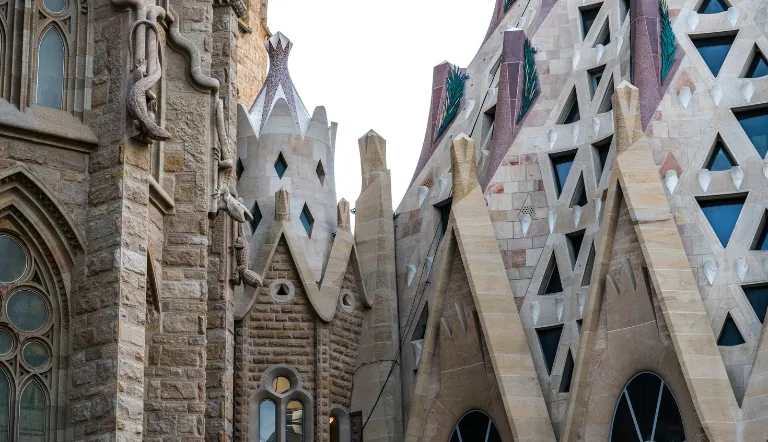
The Sagrada Família is perhaps the clearest example. Its façades contain an extraordinary number of sculptures and symbols connected to Christianity and the life of Jesus. Even visitors who spend considerable time observing the building can easily miss some of them.
Learning the meaning behind these elements changes the experience completely. What initially looks like decoration becomes part of a much larger story.
Light as another architectural element
One of the most interesting aspects of Gaudí’s architecture is something that cannot be fully appreciated in photographs: the use of natural light.
Gaudí carefully considered how sunlight would enter and move through his buildings throughout the day. Windows, stained glass, interior courtyards, and openings were designed to create different atmospheres depending on the time and position of the sun.
Inside the Sagrada Família, this becomes particularly striking as colored light passes through the stained-glass windows. In other buildings, Gaudí used interior courtyards and carefully positioned windows to distribute natural light throughout the spaces.
Craftsmanship in the smallest details
Doors, handles, railings, tiles, chimneys, and even ventilation systems demonstrate Gaudí’s extraordinary attention to detail. He approached architecture as a complete experience rather than simply designing the exterior appearance of a building.
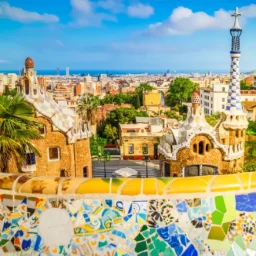
Techniques such as trencadís, which uses fragments of ceramic to create colorful mosaics, became one of the most recognizable features associated with his work. Park Güell offers some of the best-known examples, but similar attention to craftsmanship can be found throughout his architecture.
These small elements remind us that sometimes the best way to understand Gaudí is not by looking at the entire building, but by getting closer.
Discover Gaudí by learning where to look
The true richness of Gaudí’s architecture lies in the combination of spectacular forms and tiny details. Looking carefully at a façade, recognizing a natural reference, or understanding the meaning of a symbol can completely change the way you experience his work.
With Be Local Tours, discover Barcelona through the details that are easy to overlook and understand the stories, symbols, and ideas hidden behind Gaudí’s extraordinary architecture.